Before profiles were labels: the I Ching as movement in Human Design
 Annie Richardson
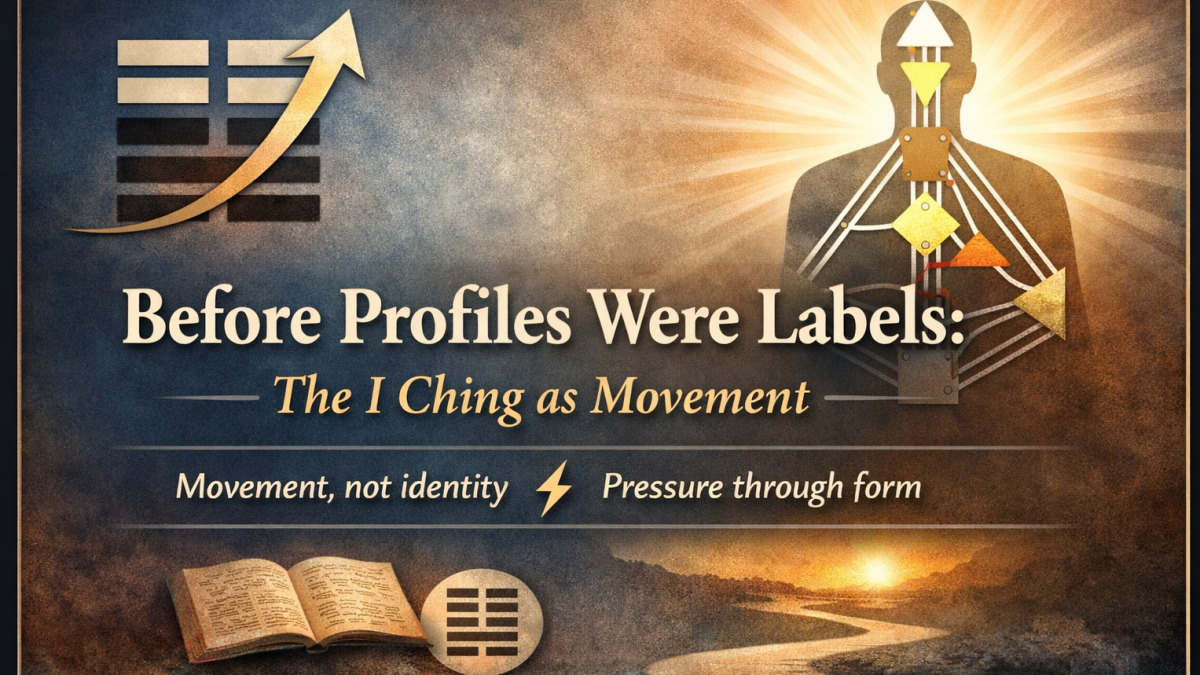
Before profiles were personality labels, they were directions of force.
Human Design inherited the six line structure from the I Ching, but much of the original movement logic was stripped away in favour of clarity and mechanics.
This post explores the original I Ching architecture beneath the profile, and how seeing it this way changes the lived experience of your design.
Key idea
Before profiles were personality labels, they were directions of force.
Before profiles were numbered, life was already moving
This post is
- the I Ching as movement
- profiles as pathways of pressure
- a return to original architecture
This post is not
- profile stereotypes
- personality labelling
- self improvement advice
Before profiles were given numbers, names, or personality descriptions, there was the I Ching.
Not as a system for self understanding.
Not as archetypes.
But as a way of observing how life moves through form.
The I Ching does not begin with meaning.
It begins with a binary.
Open or closed.
Receptive or active.
Yin or yang.
From this simplest distinction, complexity emerges. One line becomes two states. Two states become patterns. Patterns become situations. Situations become life.
Human Design inherited this structure. But in simplifying it for clarity, something subtle was lost. The sense of movement. The way pressure travels. The way life enters, reshapes, and exits form.
This is an invitation to look beneath the profile numbers and remember the original architecture they stand on.
The I Ching as movement, not identity.
In the classical I Ching, a line is not a trait.
It is a direction of force.
Each of the six lines in a hexagram describes how pressure behaves at that point in a situation.
Some lines turn inward.
They digest experience.
They reshape the self.
Some lines turn outward.
They affect others.
They influence the field.
This is not metaphor.
It is structure.
The lower three lines belong to the inner condition.
The upper three lines belong to the outer condition.
Life moves upward through the hexagram, not smoothly, but through pressure, instability, consolidation, expression, excess, and withdrawal.
Nothing here is about personality.
It is about how life behaves when it meets form.
What Human Design did with this knowledge.
Human Design took this moving system and froze it.
Instead of watching lines change over time, it asked a different question.
What happens when a human being is born with specific line positions fixed?
Each gate in the bodygraph is a hexagram.
Each line is a specific orientation of force within that hexagram.
And the profile is created by pairing two of those fixed line positions, drawn from the Sun and Earth.
This pairing is not behavioural.
It is architectural.
A profile describes where life consistently enters a person and where it consistently exits.
It shows how experience is processed and where its impact is felt.
Profiles as pathways of pressure
When we view profiles this way, they stop being labels and start becoming pathways.
They show how life moves through a human being.
Not what you should do.
But how life already meets you.
- Some profiles carry pressure inward before it ever reaches the world.
- Some discharge pressure outward almost immediately.
- Some hold tension between retreat and visibility.
- Some exist to stabilise what others disrupt.
The numbers are simply coordinates.
The story is movement.
The twelve profiles through the original lens
The architecture of survival
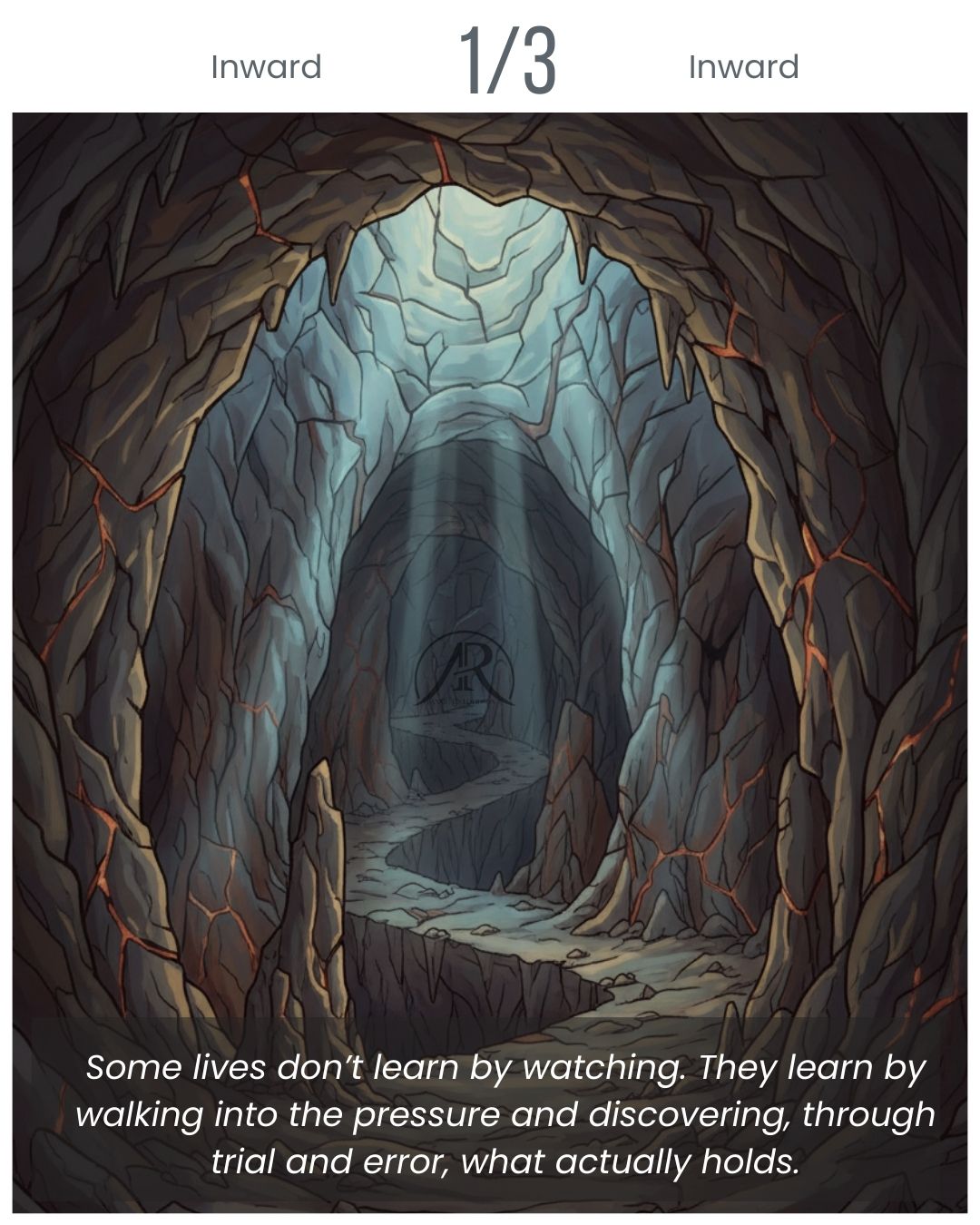
1/3
This life is built inward. Entirely inward.
Both lines face the self. Both lines hold pressure internally.
Experience does not skim the surface here. It enters, destabilises, and forces adaptation.
The first line needs ground. It needs certainty. Something solid enough to stand on when the world shakes. The third line ensures that whatever is built will be tested, not once, but repeatedly.
Nothing in this life is learned safely. Knowledge comes through contact. Through mistakes. Through what breaks and what survives.
This is not a life designed for polish. It is a life designed for endurance.
What forms inside a 1/3 is not theory. It is survival intelligence. Hard earned. Often unseen. Deeply reliable.
The world may never witness the process. But when something fails, this is the system that knows how to rebuild.
The bridge between certainty and people
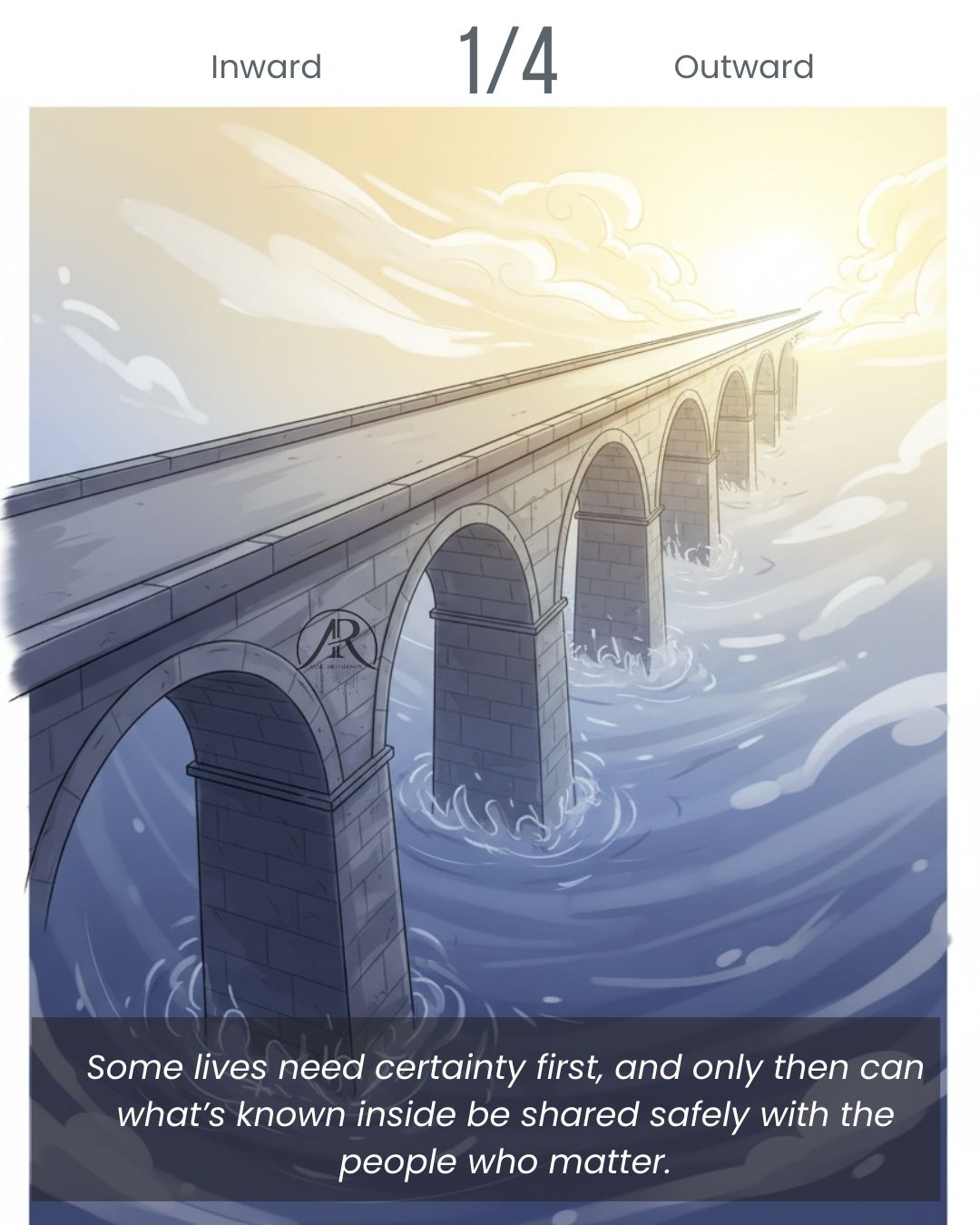
1/4
This life begins inward and moves outward, but only in that order.
The first line builds quietly. It gathers information. It establishes internal certainty. Without that foundation, nothing else can function.
Then the fourth line opens the relational field.
Knowledge does not remain private. It moves through trust. Through networks. Through people who feel safe enough to listen.
Influence here is not loud. It is personal.
When the foundation is strong, others lean in naturally. When it is not, the outward expression falters.
This profile teaches that impact is not created by visibility. It is created by certainty that has been tested privately and then shared selectively.
The rhythm of retreat and return
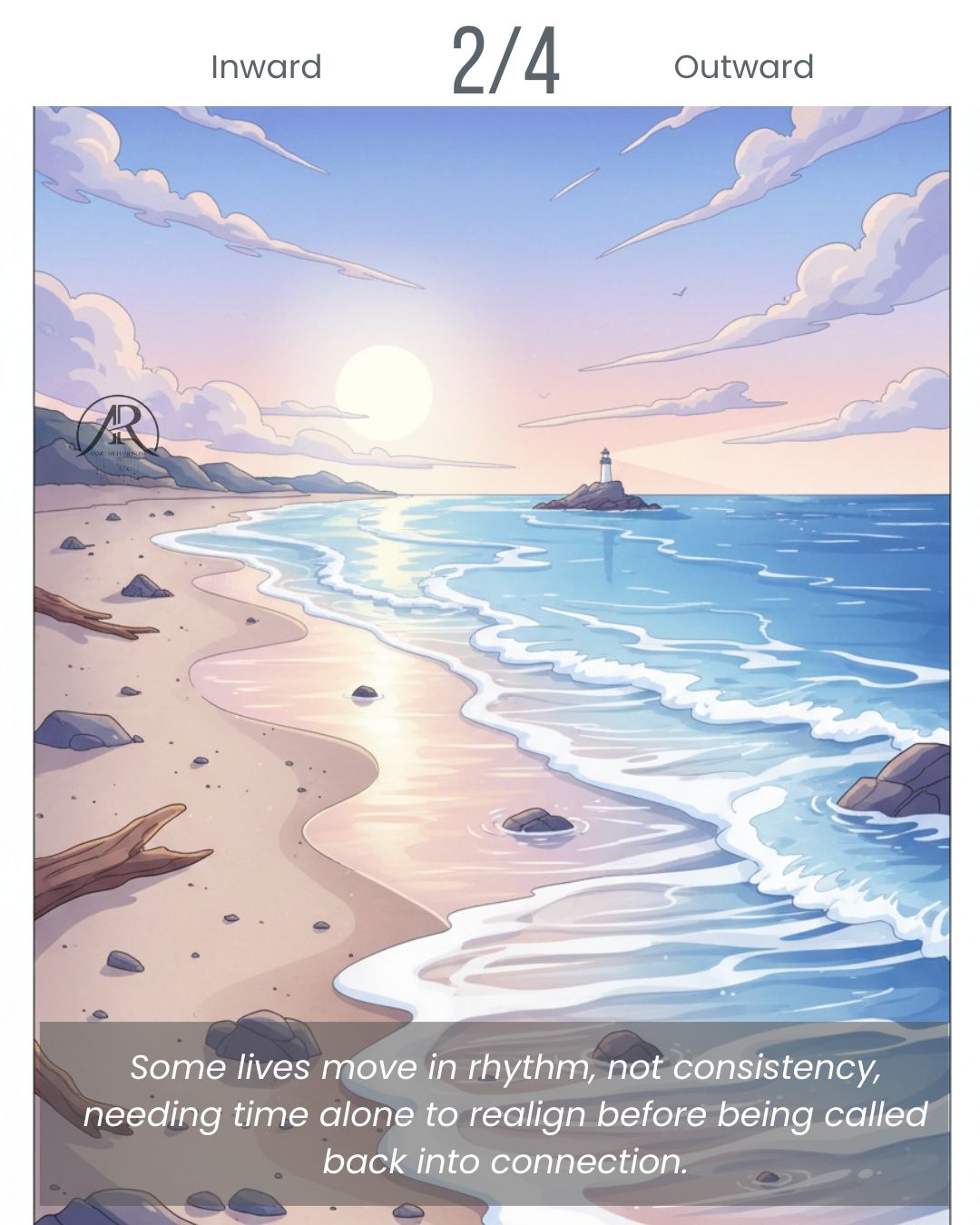
2/4
This life does not move in a straight line. It pulses.
One line faces inward. It needs withdrawal. Not to prepare. Not to improve. But to remain aligned with what is natural and unforced.
The other line faces outward. It draws this life into relationship through invitation. Not effort. Not ambition. Recognition.
These two forces pull in opposite directions, and neither is optional.
Retreat restores the signal.
Connection amplifies it.
When retreat is denied, the system loses clarity. When connection is denied, the system stagnates.
This profile teaches rhythm rather than consistency. It teaches that contribution is not constant presence. It is correct timing.
The private gift in a public world
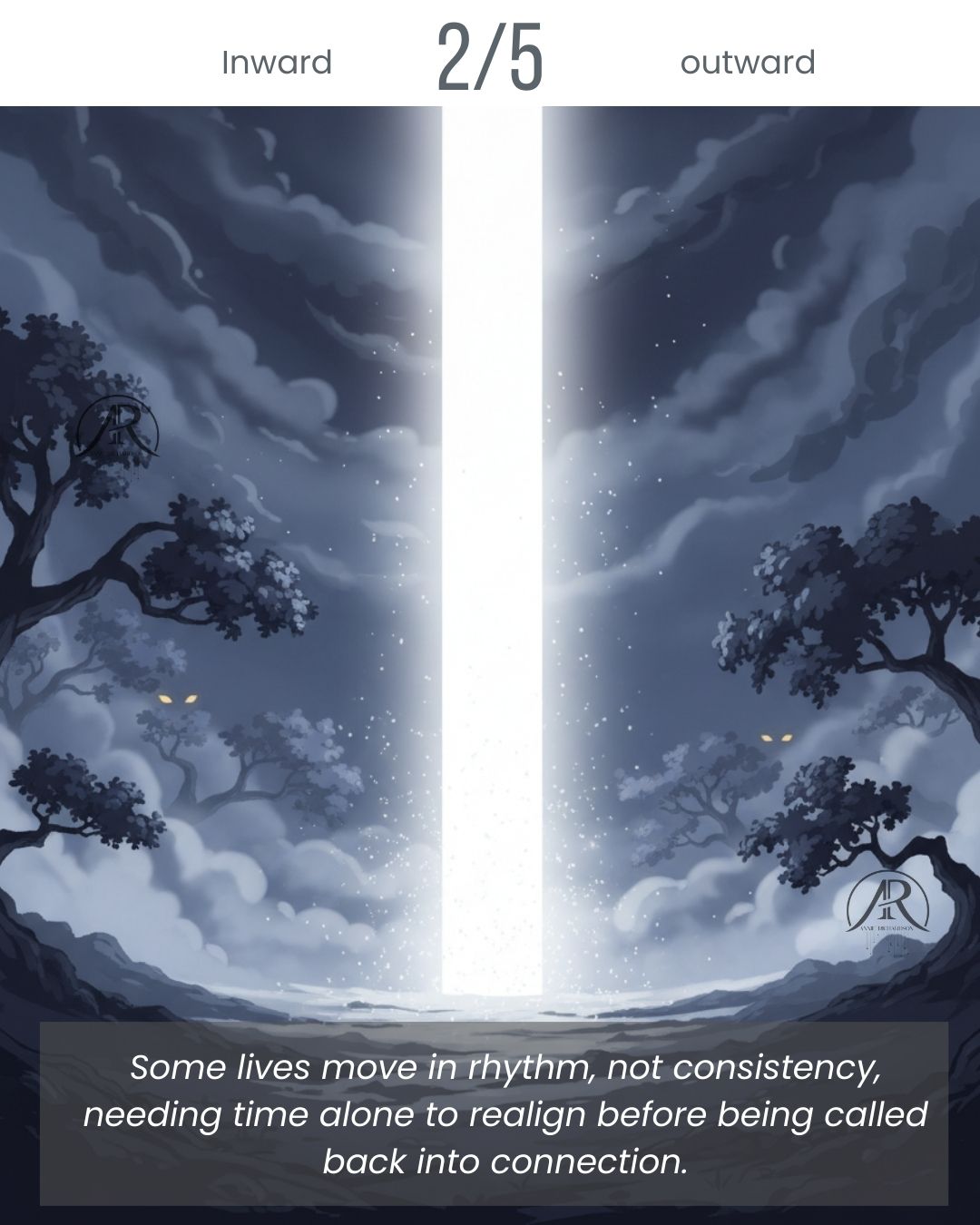
2/5
This life begins inward, but it does not stay there.
The second line is not here to improve itself. It carries something innate. A natural frequency that corrects itself through withdrawal, not effort. Solitude is not avoidance. It is calibration.
Then the fifth line intervenes.
The world sees potential. Projects solutions. Pulls this life into visibility whether it is ready or not. Expectation arrives before consent.
This creates tension that never fully resolves.
The system needs privacy to remain true.
The collective demands presence to fix what is broken.
This profile teaches discernment at a high cost. Not every call is correct. Not every projection is yours to carry. Wisdom comes from knowing when to step forward and when to disappear completely.
The alchemy of failure
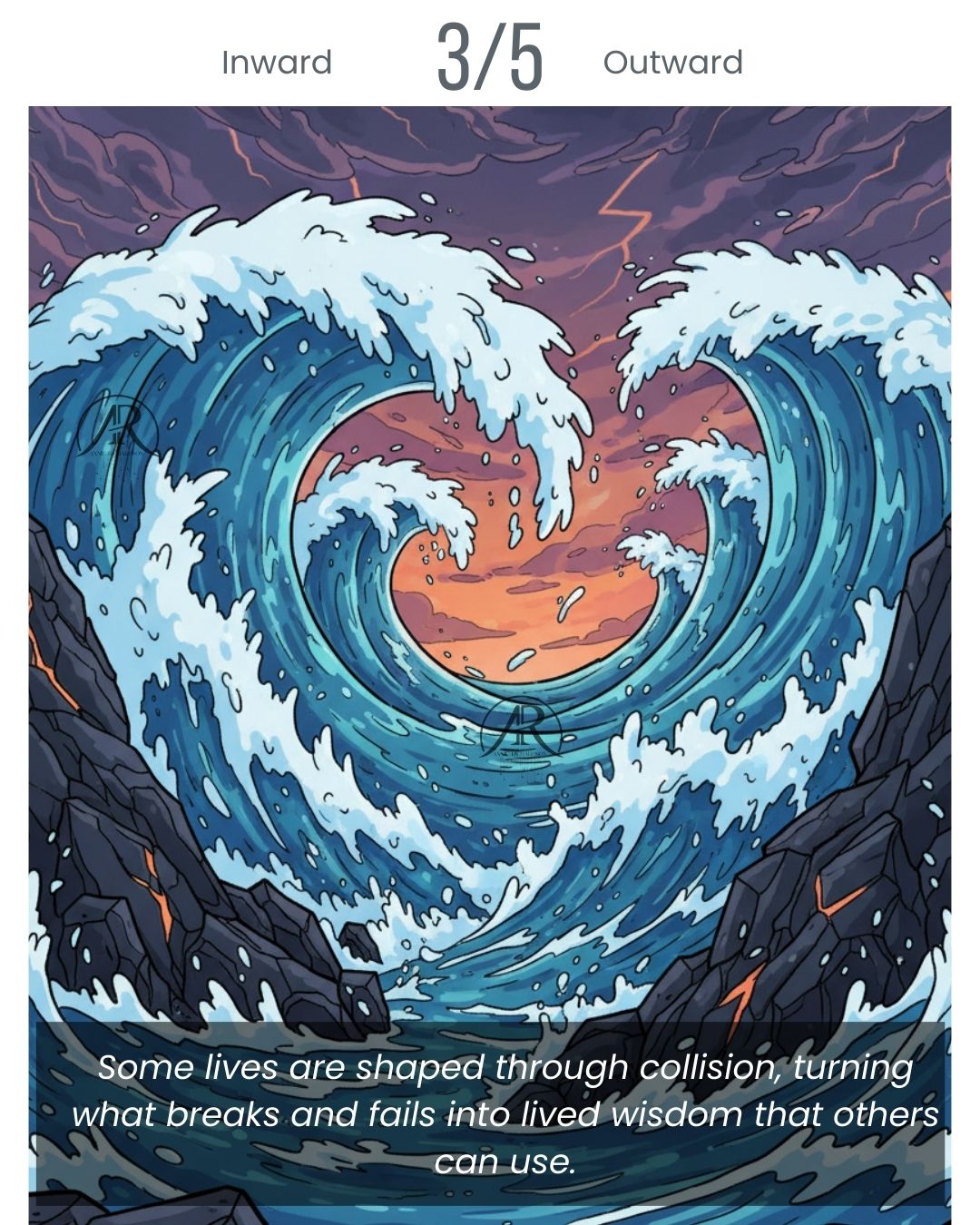
3/5
This life meets the world through collision.
The third line must experiment. It cannot learn from theory or observation. Life is touched, tested, broken, repaired. Over and over again.
The fifth line takes those lived experiments and throws them into the collective field. What was learned through pain becomes a possible solution for others.
This is volatile territory.
Failure is visible here. So is projection. When lived incorrectly, this profile is blamed for what does not work. When lived correctly, it becomes a powerful agent of change.
This life exists to break patterns that no longer function and offer something tested in their place.
Not clean. Not perfect. But real.
The long road to wisdom
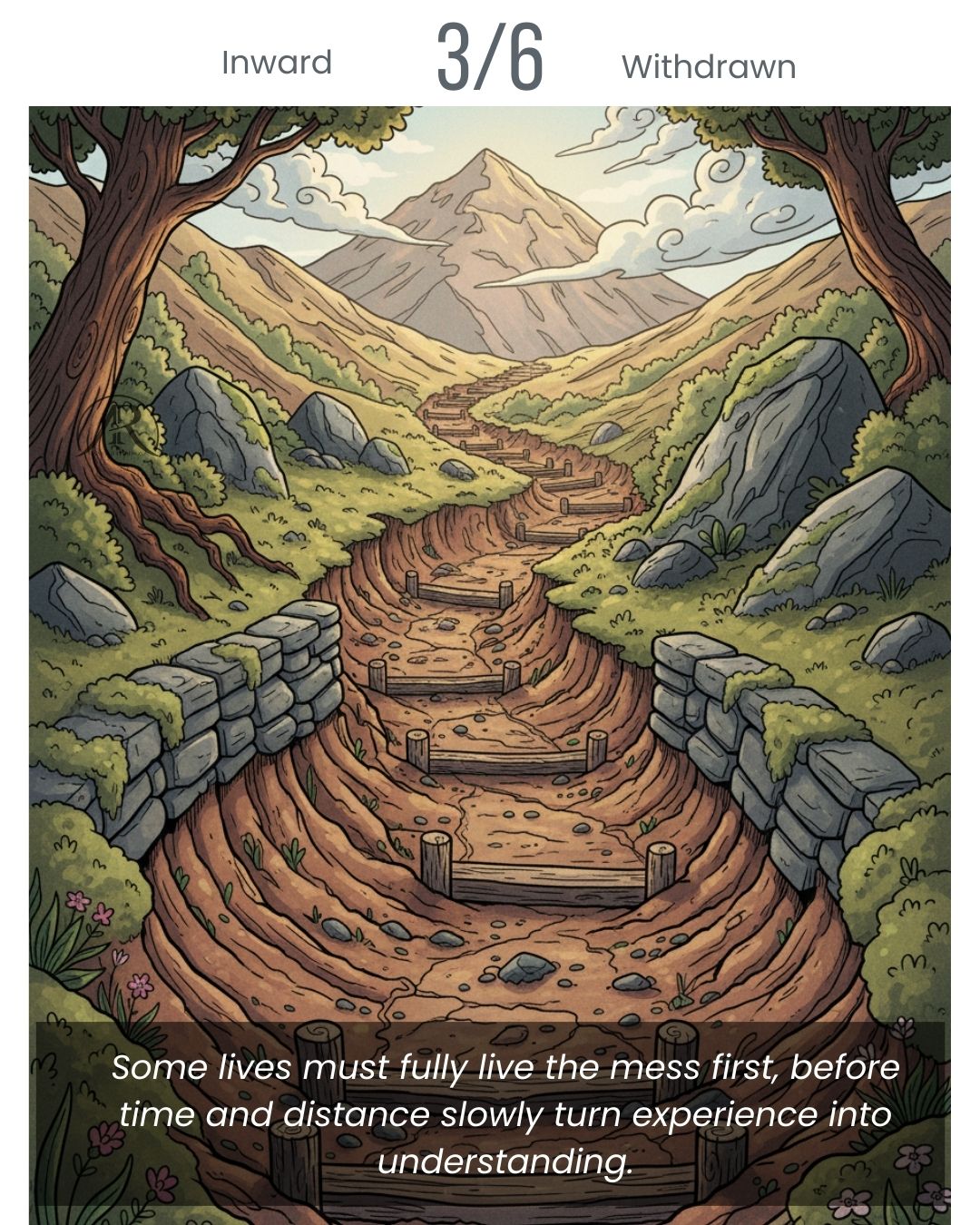
3/6
This life begins in immersion.
The third line ensures full contact with life. Mistakes are not optional. They are formative. The body learns through lived experience, not reflection.
Then time enters.
The sixth line pulls the system upward. Away from constant engagement. Toward observation. Distance becomes medicine.
What was once chaotic becomes contextual. Patterns emerge. Wisdom forms slowly.
This profile teaches that understanding earned through experience carries weight, and that not all wisdom is meant to be acted upon. Some of it is meant to be embodied quietly.
Influence with distance
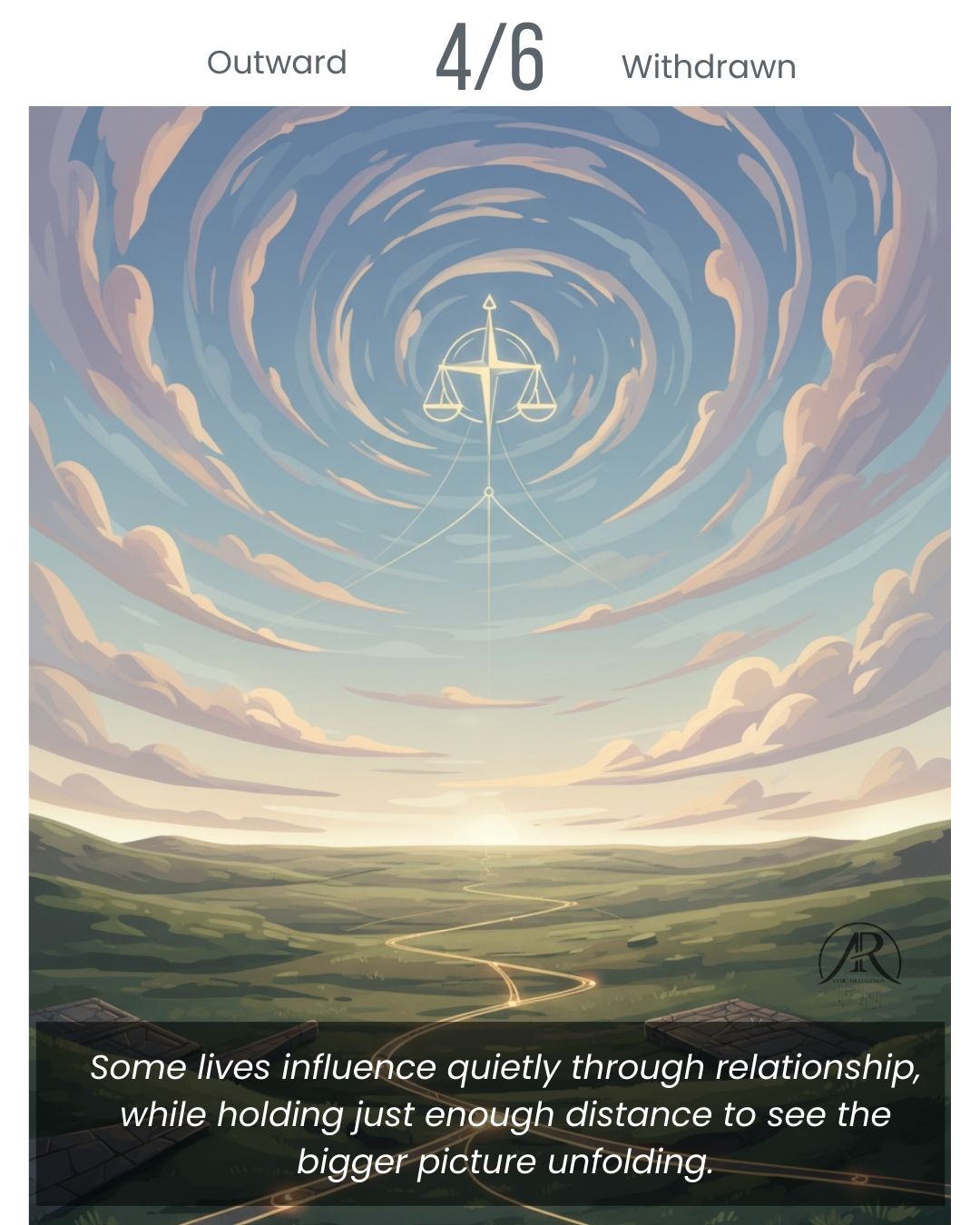
4/6
This life is outward facing, but not entangled.
The fourth line builds influence through relationship. Trust is essential. Without it, nothing moves.
The sixth line stands apart. It sees long arcs. It does not need full immersion to understand what is happening.
This creates a form of leadership that is present but not consumed. Connected, but not absorbed.
This profile teaches that guidance does not require control. Influence can exist without attachment.
The keeper of foundations
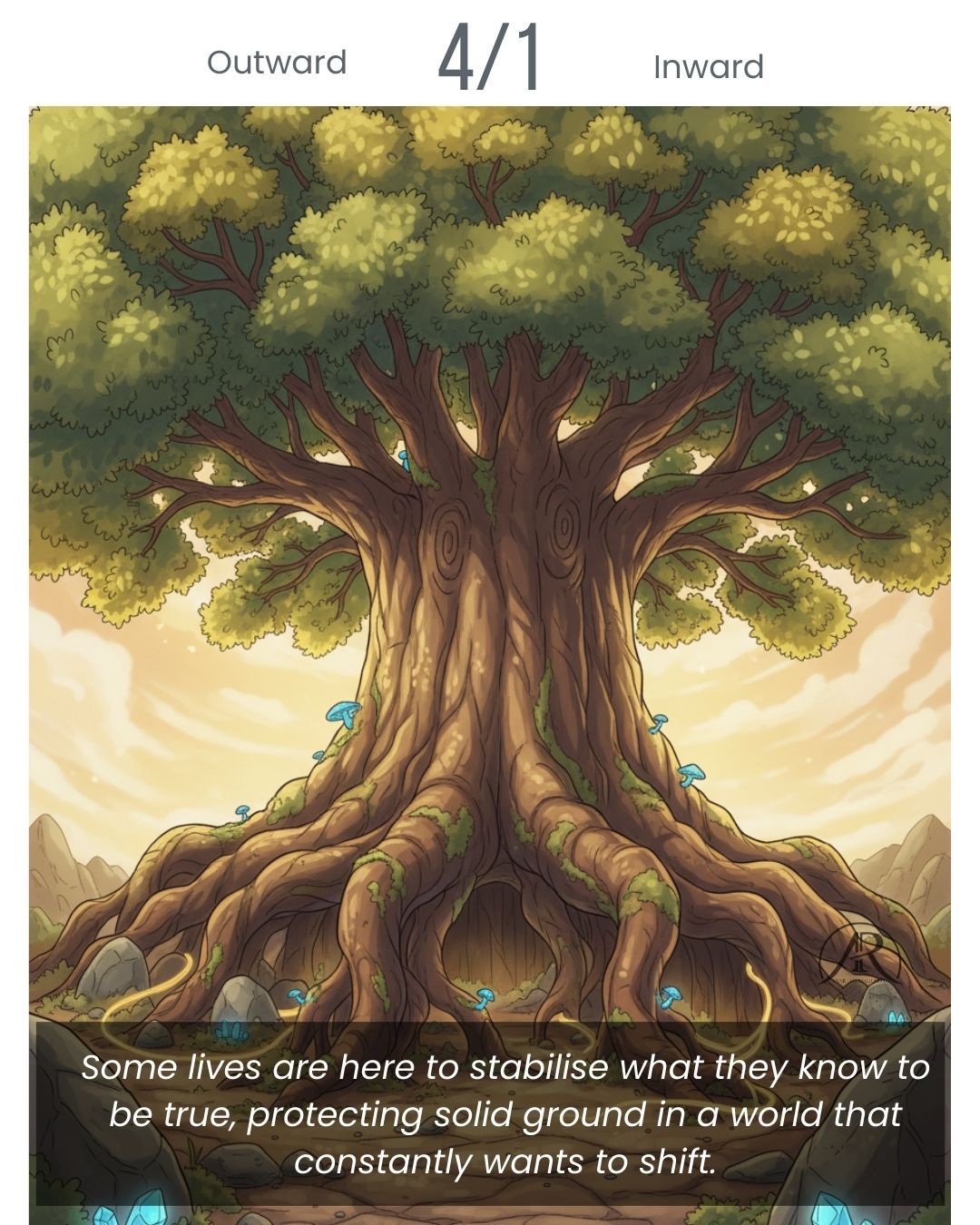
4/1
This is the most fixed of all profiles.
The first line anchors deeply. It needs certainty. The fourth line expresses that certainty outward, but only within trusted bonds.
Movement destabilises this system. Too much change threatens security.
When aligned, this profile becomes a stabilising force. A holder of principles. A protector of what must endure.
This life teaches that not everything is meant to evolve quickly. Some structures exist to hold the world steady.
The weight of responsibility
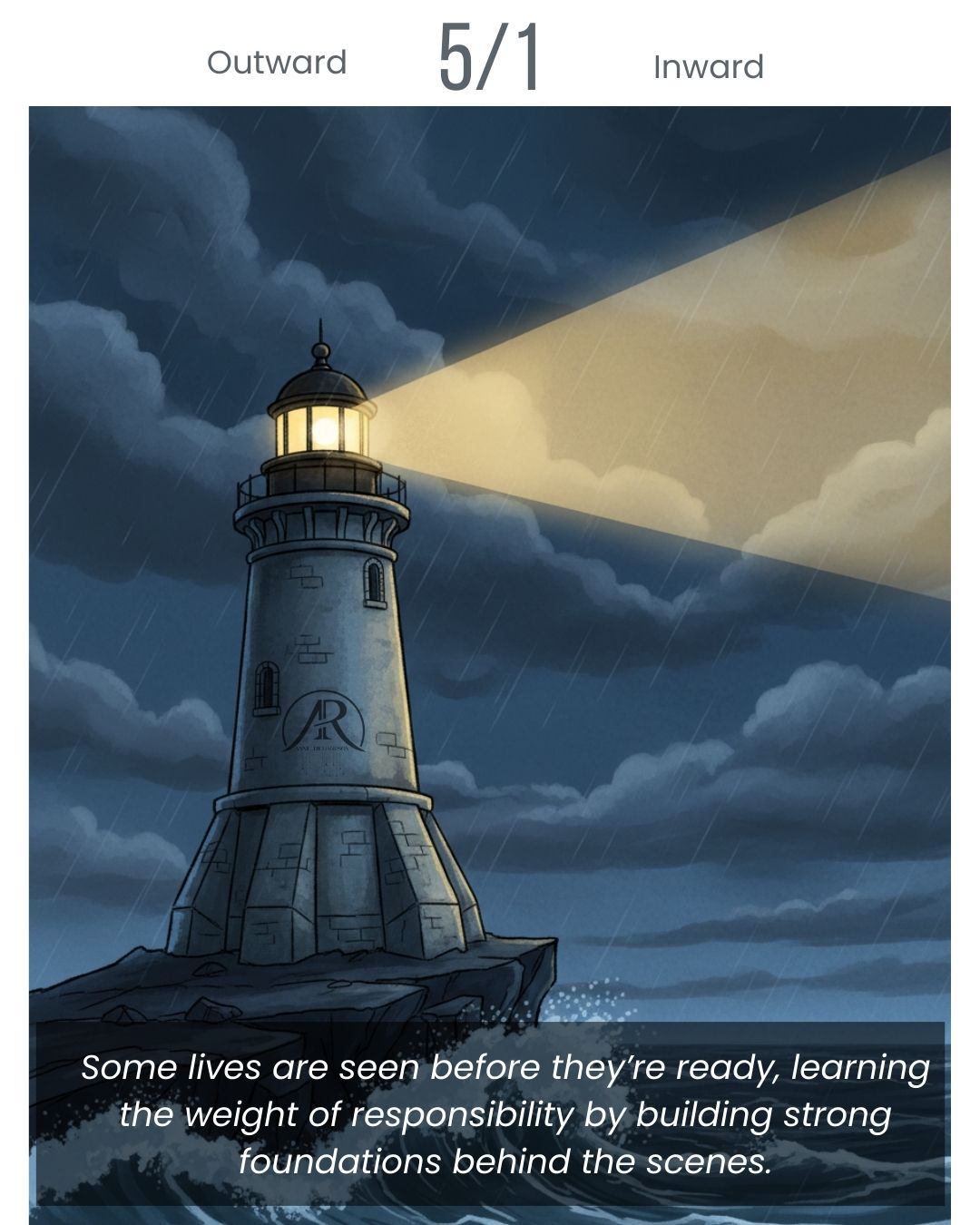
5/1
This life is seen before it is known.
The fifth line projects outward. Others expect answers, leadership, solutions. The spotlight arrives early.
The first line works inward, trying to build something solid enough to carry that expectation.
Pressure is constant here.
When this life responds too soon, it collapses under misprojection. When it waits for foundation, it becomes profoundly impactful.
This profile teaches restraint. Preparation. And the cost of being visible without support.
The call and the cave
5/2
This life is pulled in two directions at once.
The second line needs withdrawal to remain aligned with itself. The fifth line pulls relentlessly toward visibility and service.
There is no stable middle ground.
The world wants solutions.
The system needs space.
Boundaries are not optional here. They are essential.
This profile teaches that not every request deserves a response, and that solitude is not avoidance. It is maintenance.

The quiet exemplar
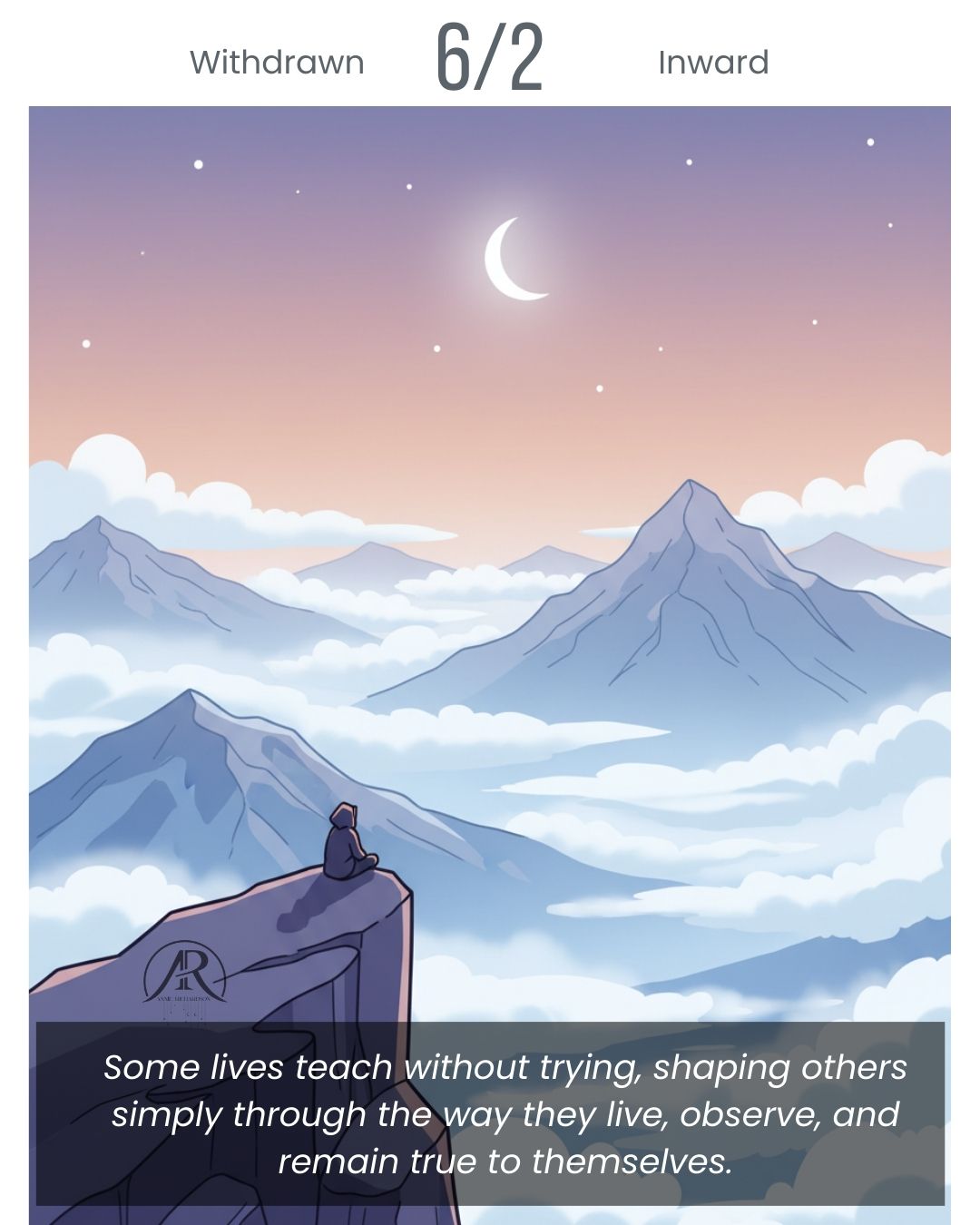
6/2
This life watches.
The second line remains inward, sensitive, selective. The sixth line observes from above, tracking patterns over time.
Action is minimal. Presence is everything.
Others learn not through instruction, but by witnessing how this life lives.
This profile teaches that integrity does not need explanation. It teaches through embodiment alone.
From chaos to clarity
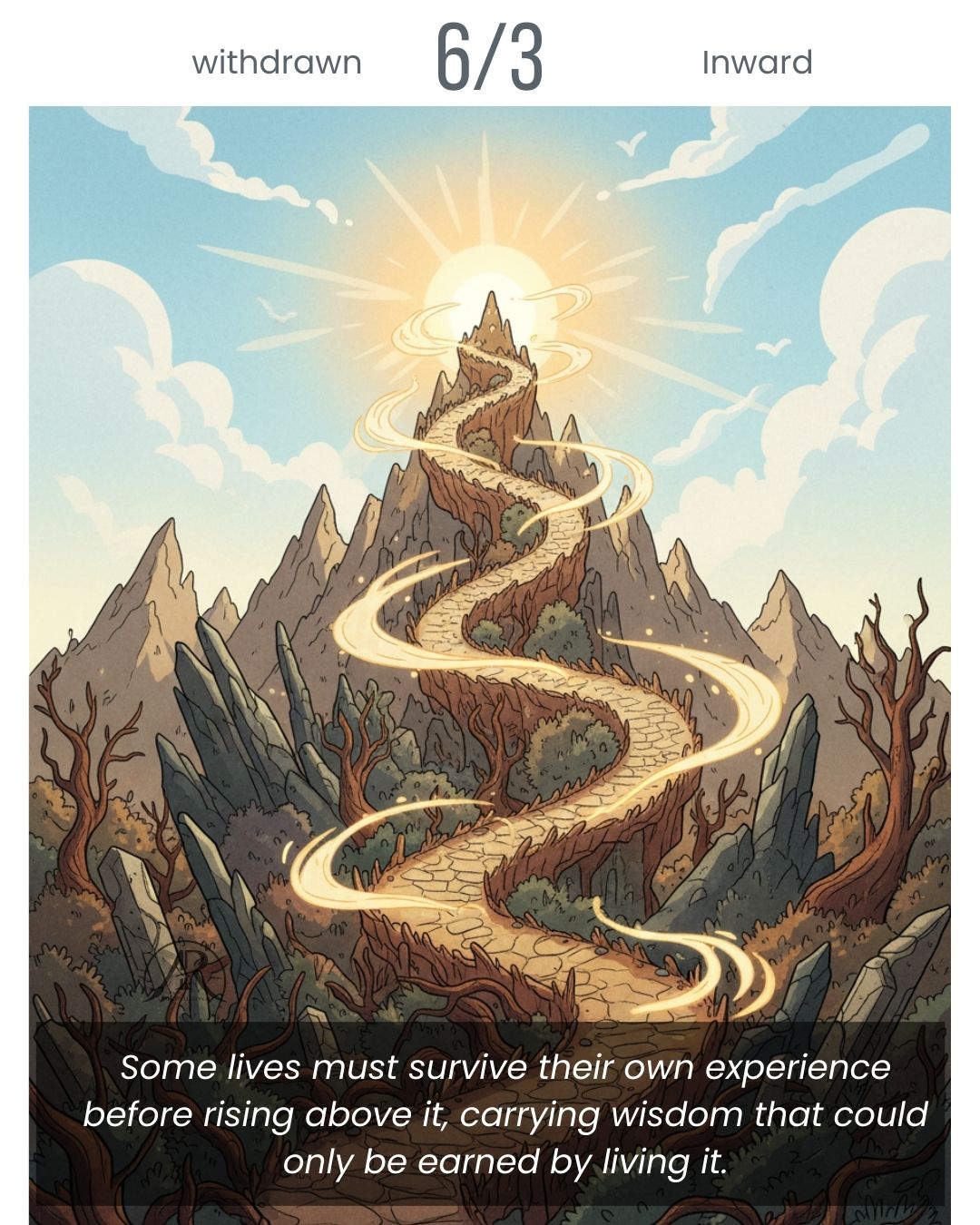
6/3
This life must live the mess.
The third line ensures full immersion in trial, error, and repair. Nothing is theoretical here. Everything is lived.
The sixth line ensures that none of it is wasted.
Over time, the turbulence settles. What remains is discernment. Perspective. Quiet authority.
This profile teaches that wisdom is not inherited. It is survived.
Why this way of seeing profiles matters
When profiles are treated as traits, something subtle happens. People begin to perform them. They try to live up to a description, to behave correctly, to embody a version of themselves that sounds right on paper.
But when profiles are seen as movement, the body softens.
The question shifts.
Not who am I meant to be?
But how does life already move through me?
There is relief in that shift.
This way of seeing is not about self improvement. It does not ask you to change yourself or refine your personality. It asks you to notice the path pressure already takes. The way experience enters you. The way it moves. The way it leaves its mark.
The I Ching was never concerned with identity. It did not ask who you are. It asked what is happening now.
Human Design carried that same question into form. It did not ask who you should become. It showed how consciousness is structured as it moves through a human life.
Profiles sit at the meeting point of those two traditions. Between observation and embodiment. Between movement and form.
And when you begin to see them this way, the numbers lose their grip. What remains is something older than labels, older than systems.
Life, moving through you, exactly as it always has.
Categories: : Human Design, Reflector