Stop blaming the sacrals
 Annie Richardson
Why overwhelm is an energy management issue, not a type problem
Human Design isn’t here to excuse poor energy management.
It’s here to teach responsibility.
I want to name something that has been quietly bothering me for a long time. Something I see show up again and again in Human Design spaces, in my therapy rooms, and in the everyday realities of relationships, families, parenting, partnerships, and workplaces.
Language like
“Oh, the defined sacrals.”
Often said with a sigh, an eye roll, a subtle accusation beneath the words.
As if the sacral is the problem. As if aliveness itself is intrusive. As if exhaustion can be explained by someone else’s vitality.
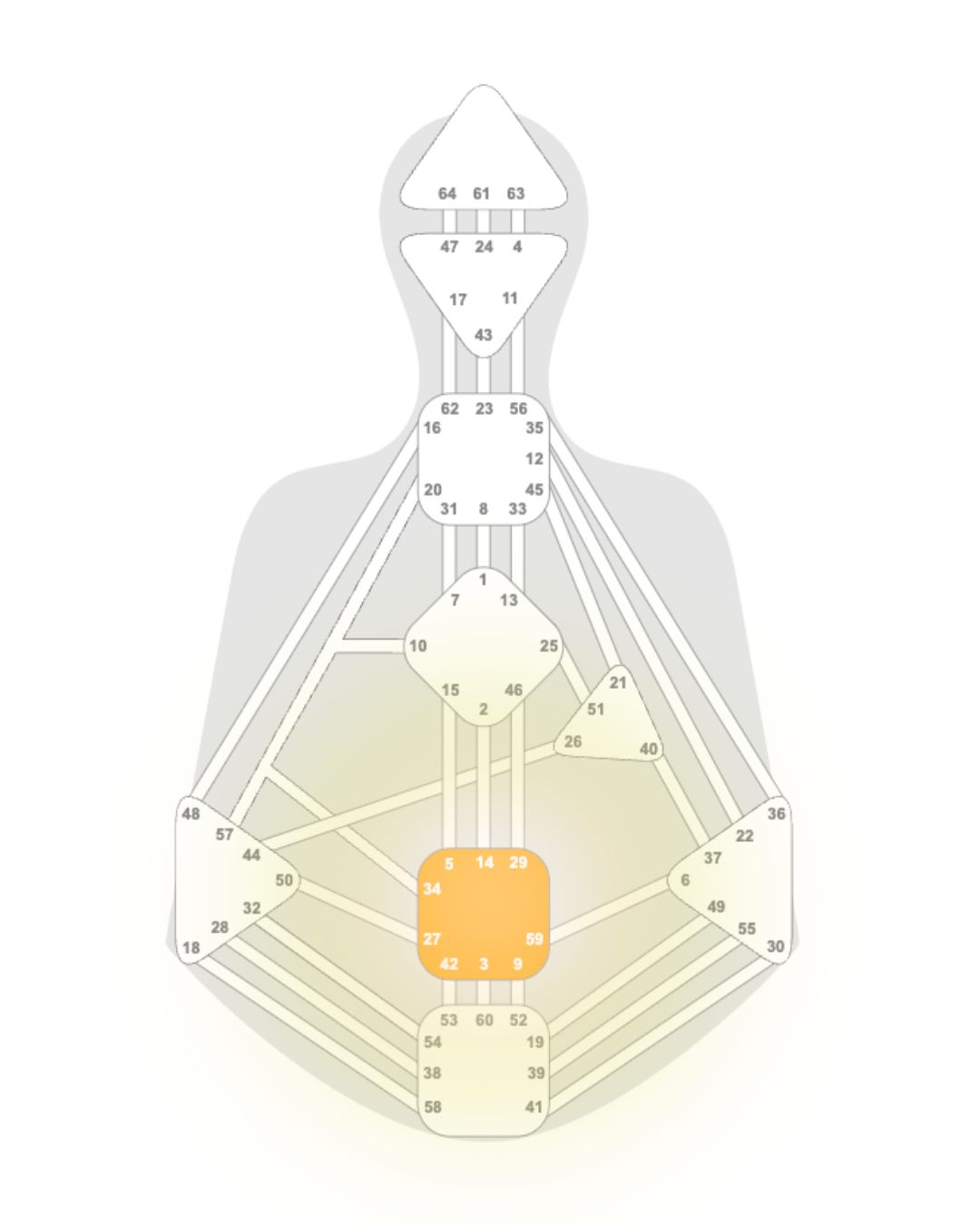
I’m tired of hearing the sacral spoken about like a dumping ground for personal dysregulation. And more than that, I’m tired of watching people quietly abandon their own agency because a framework that was meant to empower them has been turned into a shield.
This matters. Because it is doing harm on both sides.
From a psychotherapy lens, what I’m witnessing is externalisation.
Externalisation is when distress is consistently located outside the self.
My fatigue is because of the environment.
My irritation is because of their energy.
It offers temporary relief because responsibility is removed. But it also freezes growth. The nervous system never learns how to regulate itself if regulation is always outsourced.
From a Human Design lens, this is a misunderstanding of mechanics.
An open or undefined sacral does not mean no life force.
It does not mean weakness.
It does not mean fragility.
It means variability. Contextual energy. Energy that responds to environment, meaning, emotion, safety, timing, and rest.
Variable energy requires honesty. Not endurance. Not comparison. Not resentment.
Human Design never said non sacral beings are incapable of vitality. It said they are not designed for consistent, self renewing work energy. That distinction matters.
Life force exists in all bodies.
- Breath generates it.
- Emotion generates it.
- Purpose generates it.
- Connection generates it.
- Safety generates it.
- Presence generates it.
The sacral does not own aliveness. It is simply one expression of it.
What exhausts non sacral beings is not the presence of energy.
It is poor energy accounting.
Open centres amplify information. They sample. They magnify. They show you what is present in the field.
That amplification is data. It is not a command to stay. It is not an instruction to endure. It is not a requirement to sacrifice yourself.
In therapy, this pattern is painfully familiar.
Ignoring early body signals.
Saying yes when the system already said no.
Confusing stimulation with connection.
Hoping someone else will notice the fatigue and intervene.
Waiting until resentment or collapse forces an exit.
And then, looking around for something to blame.
The sacral becomes convenient.
Generators are often pulled into this dynamic unfairly. I see them sit in therapy rooms carrying unnecessary shame, questioning their desire, their consistency, their momentum, their want to do things.
That guilt is not mechanical. It is conditioned.
Aligned generator energy is not aggressive or invasive. It is open, enveloping, responsive.
When a Generator is living correctly, their sacral field is regulating. Children often settle around it. Partners feel held by it. Spaces feel organised without force.
When generators are asked to dim themselves to protect others from their own lack of boundaries, frustration grows. Resentment grows. Vitality shrinks.
That is not Human Design. That is misapplication.
Human Design was never meant to be a victim framework.
Psychotherapy was never meant to remove agency.
Both point to the same truth.
Responsibility is not about pushing through.
It is not about toughening up.
It is not about overriding sensitivity.
Responsibility is about honesty.
- How long am I willing to stay here.
- What does my body say early that I tend to ignore.
- How much energy do I actually have to give today.
- Where am I confusing endurance with worth.
- Do I leave before collapse or only after resentment.
Sensitivity is not the issue. Unmanaged openness is.
Empathy without boundaries becomes dysregulation.
Awareness without action becomes burnout.
Human Design, at its core, is about differentiation. About learning how your system works so you can live it correctly.
It also means stopping the habit of shrinking others so you don’t have to grow.
Generators do not need to apologise for being alive.
Non sacral beings do not need to harden themselves.
What is required is maturity. Nervous system literacy. Mechanical honesty.
The question is where you abandoned yourself.
When we stop blaming the sacral, something powerful happens. Sensitives reclaim agency. Generators reclaim pride. Relationships soften. Responsibility returns to where it belongs.
Not against each other.
Categories: : Human Design