The question beneath the chart
 Annie Richardson
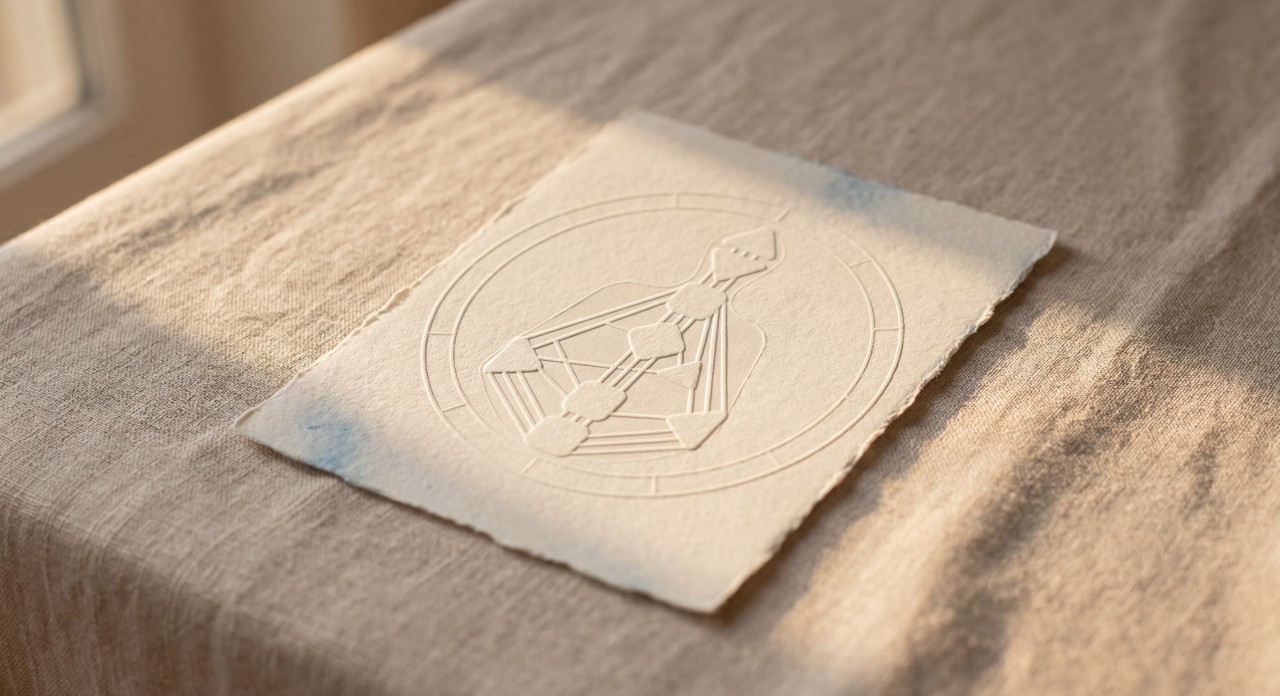
Human Design gave me language for my sensitivity. Somatic work helped me understand what was happening underneath it.

Human Design found me in my early forties.
By that stage, I had spent decades trying to understand myself.
Like many people, I had wandered through different modalities searching for answers to experiences I could feel but could never quite explain. Counselling, spirituality, energy work, personal development, breathwork, healing practices, books, courses, teachers. There was always something that offered another piece of the puzzle.
It gave me language.
Language for things I had experienced my entire life.
Language for sensitivity.
Language for feeling deeply affected by the people around me.
Language for knowing when an environment felt right and knowing just as quickly when it didn't.
Language for walking into a room and sensing that something had shifted before anyone had spoken a word.
Language for feeling different.
As a Reflector, I finally had words for experiences that had followed me since childhood. The openness. The conditioning. The impact of environments. The way other people's emotions, thoughts, energy and experiences seemed to move through me.
It wasn't that Human Design created those experiences. It simply named them.
There was something profoundly comforting about that.
When something finally has language, it often brings relief. You stop wondering whether you're imagining it. You stop trying to explain yourself to people who don't understand. You stop feeling quite so alone.
The quieter question
For a long time, that understanding was enough.
But over the years another question began to emerge.
A quieter question and deeper one. Not a, what is happening? But what is happening underneath it?
Because as much as Human Design gave me language, life kept leading me into other places of exploration.
I moved deeper into counselling and psychotherapy. I immersed myself in somatic work. I studied nervous system regulation, trauma, grief, attachment and subconscious patterning. I sat with people in some of the most vulnerable moments of their lives and listened to the stories their bodies were holding.
The more I learned, the more curious I became.
I also started noticing something else. Many of the Reflectors I worked with were incredibly aware of other people.
In fact, many had become experts at it.
They could read a room within moments. They knew when something felt off. They noticed subtle shifts in tone, mood and behaviour that others completely missed. They could often tell me exactly what everyone else was feeling, needing or struggling with.
And you know? What fascinated me wasn't their awareness. It was what happened when I gently turned the question back towards them.
- What are you feeling right now?
- What do you need?
- What feels true for you?
For many people, including myself at times, those questions were much harder to answer.
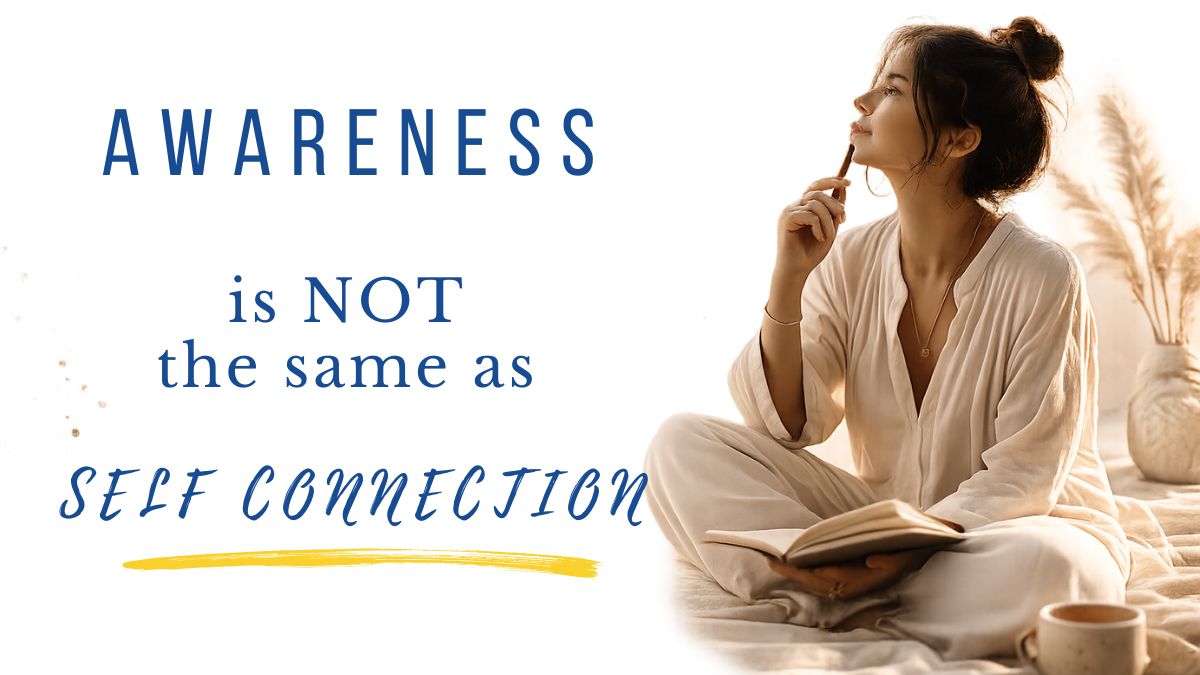
That was when I began to realise that awareness and self connection may not be the same thing.
For years I assumed they were. I thought that because I was highly aware, I was deeply connected to myself.
Now I'm not so sure, because awareness often moves outward and self connection often moves inward.
Awareness notices what is happening around us.
Self connection notices what is happening within us.
The two can absolutely coexist, but they are not necessarily the same skill.
When awareness becomes adaptation
I see this not only in Reflectors but in highly sensitive people generally.
Many of us become extraordinarily skilled at tracking the external world.
- We notice tension.
- We notice mood changes.
- We notice what people need.
- We notice what is expected.
- We notice what might create conflict.
- We notice what might keep us safe.
Over time, that awareness can become incredibly sophisticated.
Yet, at the same time, we can lose touch with our own internal experience. Why? Because adaptation is often intelligent.
When I look back over my own life, I can see how much energy went into understanding the environment around me. Watching. Reading. Anticipating. Adjusting. Trying to understand where I fit and how to belong.

Many children learn to do this very early.
- Some become people pleasers.
- Some become perfectionists.
- Some become helpers.
- Some become caretakers.
- Some become invisible.
- Some become incredibly good at being whatever everyone else needs them to be.
These patterns often get described as personality traits, but the longer I do this work, the more I wonder how many of them began as adaptations.
How many started as intelligent strategies designed to keep us connected, accepted, loved or safe?
How many became identities simply because we practised them for years?
The nervous system beneath openness
This is where my interest shifted and my curiosity came online.
I was no longer only interested in openness and conditioning through the lens of Human Design.
I became fascinated by the nervous system underneath those experiences.
I became interested in what happens inside the body when we spend years tracking everyone else.
What happens when we become highly attuned to the external world but lose connection with our internal one?
- What happens when awareness becomes vigilance?
- What happens when sensitivity becomes responsibility?
- What happens when noticing becomes absorbing?
Over the years I have watched these themes show up in countless forms.
- People pleasing.
- Overgiving.
- Perfectionism.
- Being endlessly available.
Often, you know exactly what everyone else needs while having no idea what you need yourself.
You want to be seen, then disappear after visibility feels too exposing.
You long for connection while simultaneously protecting yourself from it.
You give so much energy to understanding others that very little remains for understanding yourself.
So while we may feel like these are character disservices, they are actually patterns, and these patterns often made sense at some point in our lives.
These patterns were trying to help and honestly, these patterns deserve curiosity rather than judgement.
One of the greatest gifts somatic work has given me is the understanding that awareness doesn't only happen in the mind.
The body knows things too.
The body remembers.
The nervous system remembers.
Long before we consciously understand why we do something, our body is often already doing it.
- Already protecting.
- Already adapting.
- Already preparing.
- Already responding.
This has changed the way I think about openness.
Not instead of Human Design, but alongside it.
Because perhaps openness is not only about what we take in. Perhaps it is also about the relationship we develop with what we take in.
Perhaps awareness itself is not the challenge. Perhaps discernment is.

- We learn:
What belongs to us. - Learn what does not.
- Learn how to notice without carrying.
- Learn how to feel without becoming.
- Learn how to remain connected to ourselves while being aware of others.
Learning how to return
For me, that has become the real work.
Not becoming less sensitive or less open, or trying to shut down awareness, but learning how to stay connected to myself while all of that is happening.
I often ask myself:
- How do I remain in contact with my own body?
- How do I notice when I've drifted away from myself?
- How do I recognise when an old protective pattern has quietly stepped in?
- How do I come back?
These days I find myself spending less time trying to understand everyone else and more time noticing myself.
- Noticing when my body tightens.
- Noticing when I'm overriding a need.
- Noticing when I'm saying yes when I mean no.
- Noticing when I'm adapting rather than choosing.
- Noticing when I'm performing rather than expressing.
- Noticing when I've become so focused on what is happening around me that I've lost contact with what is happening within me.
And perhaps that is what all of this has been leading me towards.
Not becoming a better version of myself, or fixing myself. Not becoming somebody new, but learning how to return and reset.
Perhaps the work is learning how to return to ourselves.
Human Design gave me language for experiences I had carried my whole life.
Counselling gave me context.
Somatic work helped me reconnect with my body.
Grief softened parts of me that thinking alone could never reach.
Life continues to reveal new layers.
And these days I find myself less interested in certainty and more interested in curiosity.
Less interested in answers and more interested in observation.
Less interested in changing who I am and more interested in understanding how I learned to leave myself in the first place.
Because perhaps the work isn't becoming someone new or carving our a new identity, but learning how to return to ourselves beneath everything that taught us not to.
xx Annie
Categories: : Counselling, Human Design, Reflector