What a horse taught me about fear, boundaries, and self trust
 Annie Richardson
Riding a horse showed me how quickly fear turns into appeasement, and what happens when we choose clarity instead.
The horse did what it wanted and so does life...
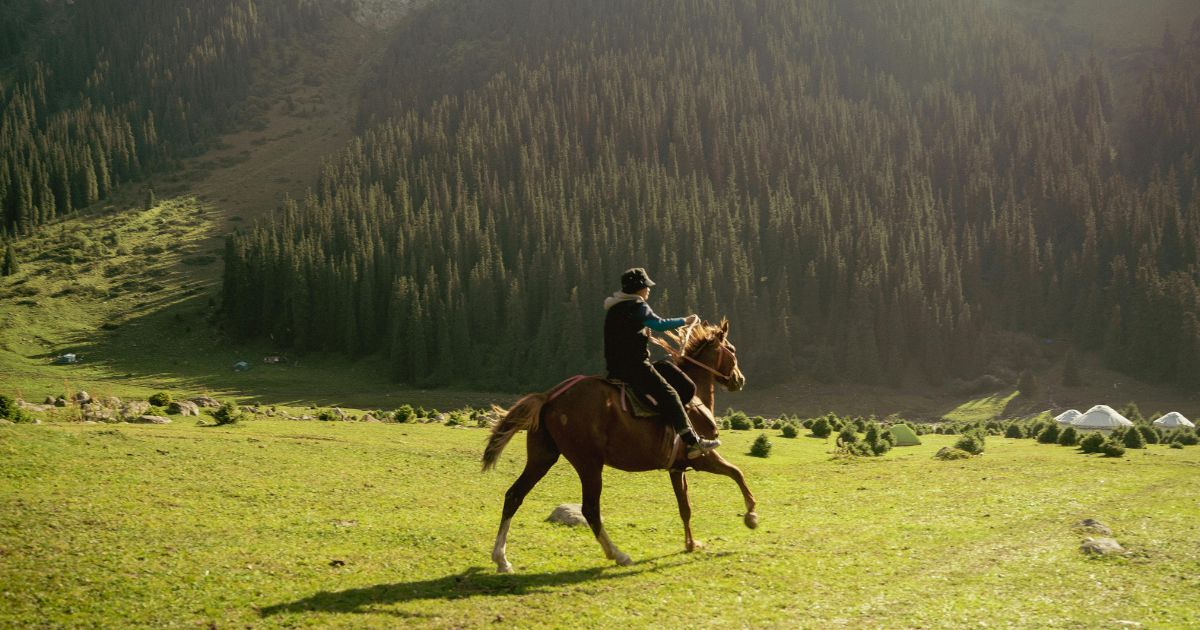
At the end of December, I went horse riding after many, many years away from it.
What surprised me was not the ride. It was what happened in my body the moment I realised the horse was reading me far more clearly than I was reading myself.
I was soft. Gentle. Easy and accommodating, and the horse responded accordingly. It wandered. It ignored subtle cues. It did what it wanted and not out of defiance, but out of a lack of clear direction.
THIS was the moment something landed in my body with absolute clarity.
Spoiler alert! This is not just about horses.
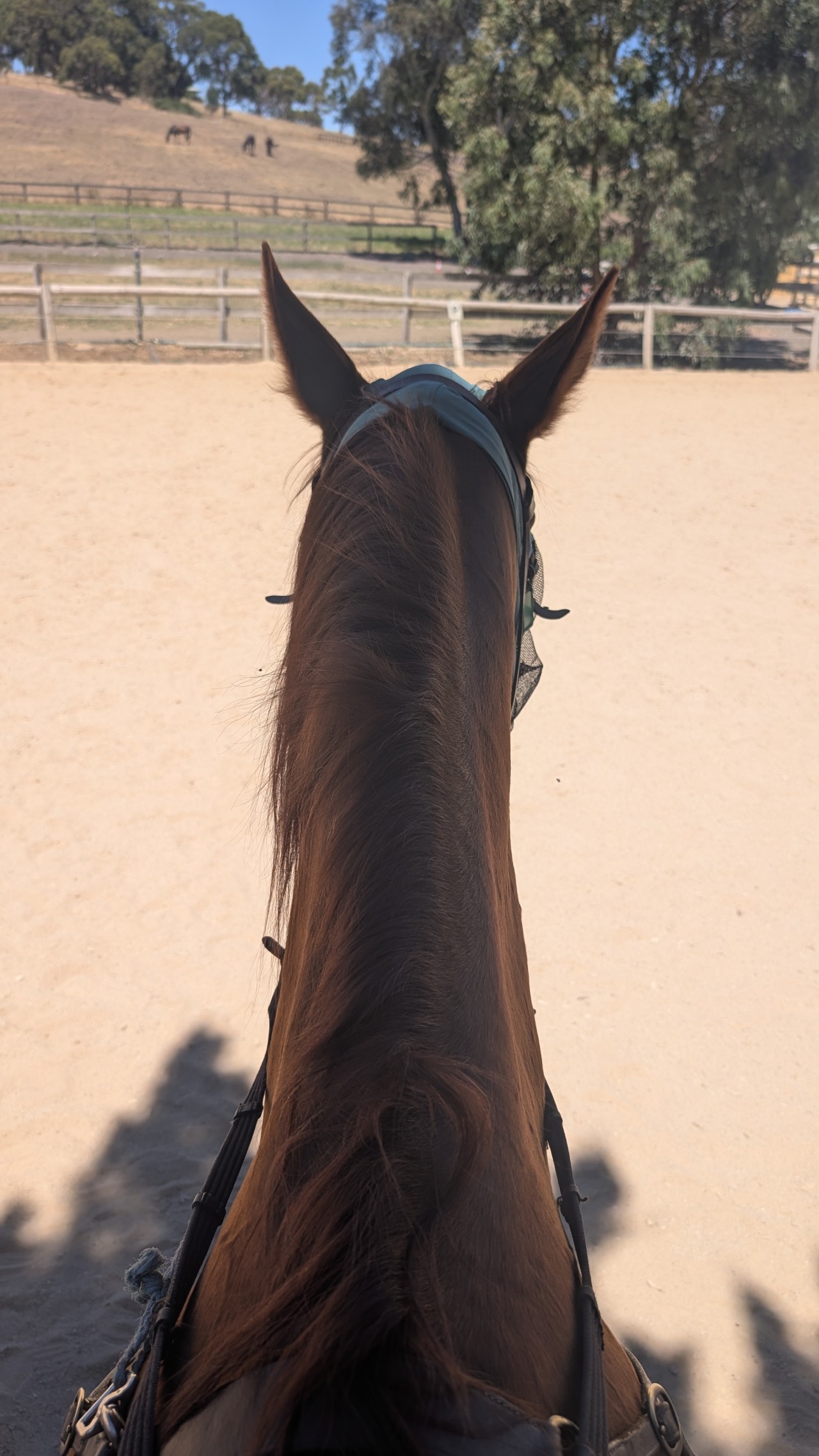
Horses are prey animals. Their nervous systems are exquisitely attuned to regulation, clarity, and leadership. They do not respond to words, instead, they respond to tone, posture, breath, intention, and decisiveness.
From a nervous system perspective, softness without direction reads as uncertainty, and friends, uncertainty does not create safety. It creates vigilance.
This is well documented in both equine assisted therapy research and polyvagal theory. Stephen Porges’ work shows us that safety is not created through niceness or compliance. Safety emerges through regulated presence and clear signalling. A calm, embodied leader allows another nervous system to settle.
In this example and interaction, the horse did not need me to be kind. It needed me to be clear.
AND So do people.
When niceness becomes a survival strategy
Many of us learned early that being easy (and nice) kept us safe.
We learned that not asking for too much preserved connection. That adapting was better than disrupting. That being agreeable reduced conflict. Over time, this becomes a boundary style rooted in survival rather than choice.
In therapeutic language, this is the fawn response. It is not empathy. It is not kindness. It is a nervous system strategy designed to maintain attachment at the cost of self expression.
The problem is that fawning does not create true connection. It creates confusion and sends mixed signals. The signal of, "I am with you, but I am not anchored in myself".
The horse i was on, felt that immediately and somewhere inside myself, I did too.
The moment i stopped being nice.
There was a point on the ride where I had to stop being nice.
Not aggressive. Not forceful. Just clear.
I had to give direction, and to lean in and trust that I could ask for what I needed. To trust that clarity would not cause harm, and to trust myself enough to take up space in the interaction.
In that moment, the shift was instant.
The horse settled, and he responded. The tension in my body eased, and not because I now controlled the horse, but because structure entered the field as well as my confidence and trust in myself.
This is what boundaries actually do.
Boundaries are not walls. they are orientations.
Boundaries are often misunderstood as rigidity or control. In reality, boundaries are information. They tell the nervous system where you are in relation to another.
Clear boundaries provide containment and containment allows relaxation.
In clinical work, I see this repeatedly. People who struggle with boundaries are rarely overbearing. They are perceptive, empathic, and relational. Their difficulty is not asserting power. It is trusting that their needs will not cost them belonging.
Self trust is not confidence
Self trust is not bravado or certainty. It is the embodied belief that you can tolerate the outcome of being honest.
It is knowing that you can stay with yourself even if someone or something in this case, is displeased. That your system will not collapse if approval is withdrawn. That your needs are allowed to exist in the relational field.
On the horse, I did not have the luxury of self abandonment. My body needed safety. That necessity bypassed years of social conditioning around being nice, easy, and agreeable.
The nervous system chose regulation over approval.
AND That choice matters!
Why clarity stabilises relationships
Here is the paradox many people miss.
Clear boundaries do not destabilise relationships. Ambiguity does.
When boundaries are unclear, resentment builds quietly. Anxiety rises. Roles blur. Someone else steps in to organise the field; often unconsciously.
When boundaries are clear, systems settle. Animals respond. People respond. Not always with agreement, but with orientation.
The horse did not reject me when I became clear. It relaxed.
What this moment teaches us.
This experience was not about learning to ride again.
It was about remembering that softness and self abandonment are not the same thing. That empathy does not require erasing yourself. That leadership does not require dominance.
Sometimes what is needed is not more compassion for others, but more trust in yourself.
- To speak.
- To direct.
- To orient the field.
- To stop managing other people’s reactions at the expense of your own regulation.
The body remembers moments like this.
Once you feel the difference between niceness and clarity, between fawning and self leadership, you cannot unfeel it.
And that is where real change begins.
Categories: : Counselling, Healing